
The Psychology Behind People Who Always Say “Thank You” to Waiters: What It Reveals About You

It’s one of those tiny, everyday moments that barely registers.
The food arrives. Plates are cleared. The bill lands on the table. Somewhere in that sequence, a simple “thank you” either happens… or it doesn’t.
Most people wouldn’t think twice about it.
But if you ask anyone who’s spent time working in a restaurant, they’ll tell you—this small detail stands out more than you’d expect. In fact, it can quietly say a lot about the person sitting at the table.
There’s an invisible line in restaurants. Customers on one side, staff on the other. It’s not written down anywhere, but everyone feels it.
The people who say “thank you” tend to cross that line without even realizing it.
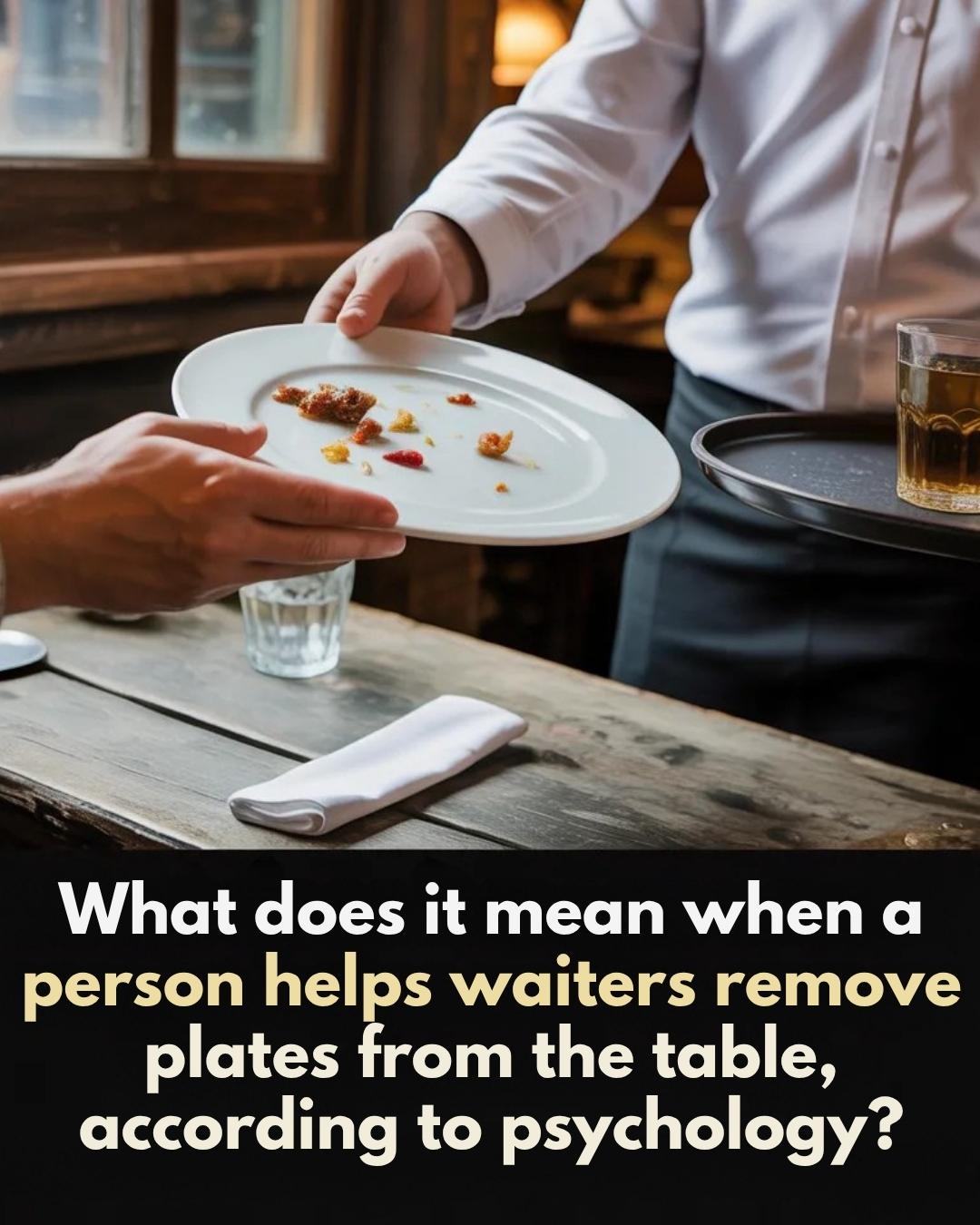
They’re not just interacting with a role—they’re acknowledging a person. Someone juggling multiple tables, handling pressure, moving quickly, trying to keep everything running smoothly. That subtle shift in how they see things? It rarely stays confined to the restaurant.
It shows up elsewhere, too.
And then there’s awareness.
Restaurants are fast-paced, often chaotic environments. Orders stack up, plates move in and out, things don’t always go perfectly. When someone takes a second to say “thank you,” it usually means they’re tuned in. They notice what’s happening around them instead of just passing through the experience.
It’s a small signal—but it’s a meaningful one.
There’s also something deeper behind it.
For many people, saying “thank you” isn’t a decision they actively make in the moment. It’s automatic. A habit that’s been there for years. It slips out naturally, without thinking.
And that kind of behavior doesn’t tend to switch on and off depending on the setting.
Here’s something most diners never really consider: staff remember how you make them feel.
Not always your face. Not always what you ordered. But your attitude? That sticks.
The person who makes eye contact, offers a quick thank you, and treats the interaction like it matters stands out immediately—especially in a space where that isn’t always the norm.
The surprising part is how little it takes.
No extra effort. No cost. No time.
Just two words.
Yet those two words can shift the entire tone of an interaction. They can take a stressful moment and soften it, turning something routine into something a bit more human.
And then there’s the flip side.
The silence. The plate taken without a word. The interaction treated as purely transactional—start to finish.
That leaves an impression too. Just as strong, in its own way.
So what does it really come down to?
It’s not just about manners.
It’s about how aware you are of the people around you. How you treat someone when there’s nothing to gain from it. How you show up in the smallest, most easily overlooked moments.
Because sometimes, those are the moments that reveal the most.
