
The 6 BEST Substitutes for Beans in Soup!

When it comes to comfort and convenience, you can’t beat a big pan of hot soup!
It’s quick and easy, it can feed the whole family, and it’s a wonderful way to get more veggies and goodness into your diet.
But what if your usual recipe calls for beans, and you don’t have any in your pantry?
Or what if you just want to try something a little bit different?
Beans are used in many soup recipes for a variety of reasons.
These include adding extra fibre and protein, bulking out the meal to make it more filling, and of course because so many people enjoy the taste.
The good news is that you’ve got some great options to consider if you’re wondering what to use in soup recipes instead of beans…
What are the best substitutes for beans in soup?
The best substitutes for beans in soup include lentils, pasta, wild rice, potatoes, couscous, and more of your favourite vegetables.
Keep reading to find out more about the best alternatives, when to use them, and why…
1. Lentils
Lentils are rich in fibre, potassium, and folate, as well as being a good source of iron and vitamin B1.
They have a mild, earthy taste that differs slightly depending on the exact type of lentil that you use.
When added to soup, they add bulk and a slight creaminess as well as flavour.
The good news about using lentils instead of beans is that they don’t require soaking before adding them to the pot.
They’re so small that they’ll cook quickly alongside your veggies. You’ll just need to rinse them!
If you’re looking for some inspiration for using lentils in soup, check out this ham and lentil soup recipe.
2. Pasta
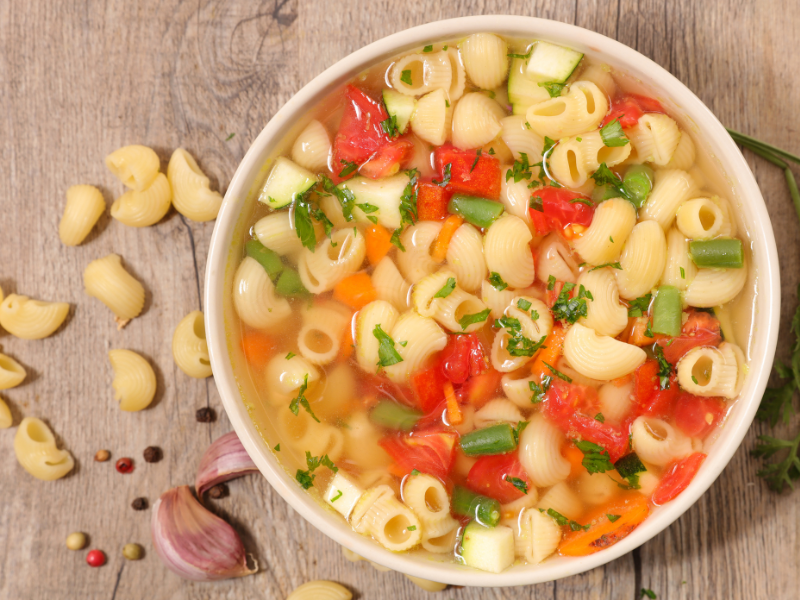
If you’re aiming for a satisfying bowlful that’s suitable for dinner, pasta is a great choice when it comes to substitutes for beans in soup.
You might be wondering whether to add pasta cooked or uncooked, and this is a good question with a variety of different answers.
It largely comes down to the pasta you’re using, the kind of soup you’re aiming for, and your own personal preferences.
Generally speaking, if you’re using semolina or egg pasta, you’re fine to add it to your soup pot uncooked for the final 10 minutes of cooking.
Cooking your pasta in the soup will often cause a more cloudy appearance, though it won’t impact the overall flavour.
(By the way, if you love pasta in soup, take a look at side dishes for tortellini soup for some more ideas!)
3. Wild rice
Wild rice is chewy and tasty, higher in protein than regular rice, and rich in nutrients and antioxidants. It’s a good choice when you’re looking for alternatives for beans in soup recipes.
Again, you’ll likely be wondering when it should be added, and whether it should be cooked or uncooked.
It comes down to your own preferences, though it’s important to note that rice will continue to absorb liquid until it’s fully saturated. This means that if you’re keeping leftovers in the fridge, it’s common to find that the rice has become bloated and turned your soup into something of a stodgy mess.
You can avoid this by simply preparing your rice separately and stirring into your soup once you’re ready to tuck in, or using less rice so it doesn’t overwhelm the broth.
4. Potatoes
Potatoes are a fantastic addition to soup if you’re looking for an alternative to beans.
They’re affordable, filling, can help to thicken things up, and they’re even handy to have on hand in the case that you find that soup is a little too salty. They’ll absorb much of the excess salt, and make it more palatable!
If you want to explore the beauty of adding spuds to soup, try this recipe for vegan German potato soup. It’s such a beautiful recipe for the cold winter months, and it’s also dairy free and gluten free, making it a good choice if you’re catering for loved ones with specific dietary requirements.
5. Couscous
Couscous is a delicious substitute for beans in soup recipes, and you can either add it uncooked for around thirty minutes towards the end of the cooking time, or simply cook and stir through when you’re ready to serve.
It’s a good choice for thickening up your soup, and it makes for an interesting and unique texture. I particularly like to use couscous if I’m aiming for Moroccan inspired flavours, and this Moroccan chicken and couscous soup is my go-to choice when I’m in the mood for something spicy. It’s rich, flavoursome, and sophisticated enough for a dinner party or entertaining guests.
6. More of your favourite veggies
One of the best things about making soup for dinner is that there really are no rules! Add veggies, some stock, your favourite seasonings and spices, and you’re good to go.
Everything else is optional, and it’s a good opportunity to raid the fridge and pantry and just see what needs using up. (As a side note, I always love the indulgence of adding a swirl of cream at the end!).
But if you don’t have beans, you can easily substitute them with more of your favourite vegetables. Carrots, parsnips, onions… Anything goes.
I often make a big pan of soup at the end of the week before I do the main food shop. It’s a brilliant way to use up any odds and ends that might otherwise go to waste, and you can even freeze portions for lunches over the coming weeks.
Alternatives to beans in soup
The best substitutes for beans in soup include:
- Lentils
- Pasta
- Wild rice
- Potatoes
- Couscous
- More of your favourite vegetables
Any of these options can be used to make a delicious pan of soup when you’re short on store cupboard ingredients!
