
How Big Is A 4oz Steak? Answered!

A 4 oz steak weighs approximately 113 grams, but it’s important to consider that the physical size of the steak can vary based on factors such as the specific cut and thickness.
So how big is a 4oz steak?
To visualise it, it’s roughly the size of a deck of cards, or the palm of your hand.
It’s fairly small, so it’s perfect for lunch or a lighter meal.
Familiarising yourself with this comparison can help you make informed decisions when it comes to choosing and cooking the right steak for your specific culinary needs.
I often choose a 4oz steak and serve it alongside poached eggs and a raw broccoli salad for a nutritious and satisfying lunch that isn’t too heavy.
This size is also often my go-to choice for dinner parties, especially if I’m also serving a starter, side dishes, and desserts!
By understanding the size of a 4 oz steak, you’ll be better equipped to select the ideal cut and cooking method for your meal.
Thicker cuts, like ribeye or filet mignon, are perfect for grilling or pan-searing, while thinner cuts like flank or flat iron steak work excellently with quick-cooking methods like stir-frying or broiling.
In this guide, you’ll learn more about the factors that you should be aware of when it comes to selecting and cooking the perfect steak!
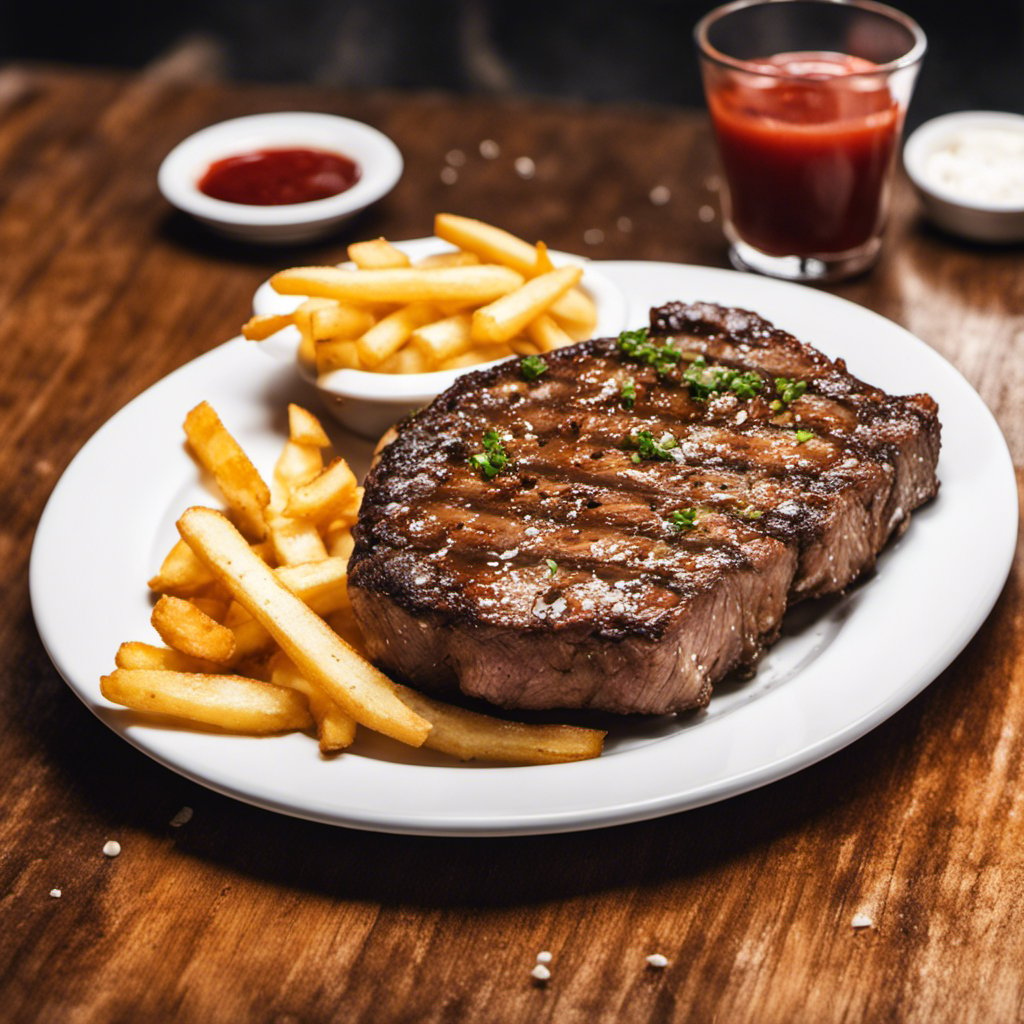
The Role of Cooking in Steak Size
Choosing the right cooking method for your 4 oz steak can enhance its flavour and texture.
There are various cooking methods to consider, such as grilling, broiling, frying, and pan-searing.
Let’s explore how each method affects your steak’s size and appearance.
Grilling and broiling are both high-heat cooking methods that create a tasty, seared crust on your steak while retaining moisture.
This results in minimal shrinkage and juicy texture, making your 4 oz steak appear larger than when cooked using other methods.
Grilling generally takes 2-3 minutes per side for medium-rare, while broiling takes about the same.
To ensure even cooking, use a meat thermometer and aim for an internal temperature of 130°F (54°C) for medium-rare, 140°F (60°C) for medium, and 150°F (66°C) for well-done.
Pan-searing and frying are similar methods, whereby the steak is cooked on a hot skillet or frying pan with a small amount of oil.
These methods cook faster than grilling or broiling, so be sure to monitor the cooking time closely.
For a 4 oz steak, you can expect to cook it for about 2 minutes per side for medium-rare, 3 minutes for medium, and 4 minutes for well-done.
To get the desired results, it’s a good idea to use a meat thermometer and follow the same temperature guidelines as for grilling and broiling.
Regardless of your chosen cooking method, allowing your steak to rest for a few minutes after cooking is crucial.
Resting helps to redistribute the juices and maintain the steak’s moisture, which further contributes to the appearance of a plump 4 oz serving.
Typically, a brief rest of around 5 minutes will suffice.
In summary, cooking methods play a vital role in the size and overall presentation of your 4 oz steak.
Regardless of your preferred technique, stick to precise cooking times and internal temperature guidelines, and remember to allow your steak to rest for optimal results.
Recognising Steak Cuts
When it comes to choosing the perfect steak, it’s essential to know the different cuts available.
Each cut of steak comes from a specific part of the animal and offers a unique combination of flavour, tenderness, and texture.
Let’s explore some of the most popular steak cuts so you can be confident when making your selection.
Filet Mignon is a highly prized cut, known for its tenderness and subtle flavour.
It is taken from the smaller end of the tenderloin, which is located in the middle of the animal’s back.
This cut is lean, with little marbling, making it ideal for those who prefer a tender, lean steak.
Ribeye is a well-marbled cut from the rib section of the animal.
The marbling makes it rich in flavour and very tender.
It’s an excellent choice if you’re looking for a juicy, flavourful steak.
Sirloin is a versatile cut from just behind the rib section.
It is fairly tender and moderately marbled, making it a popular choice for grilling, broiling, or pan-searing.
Serve it whole or slice it thinly for a delicious steak salad or sandwich.
Hanger Steak is taken from the plate section of the animal, located just behind the front legs.
This cut is known for its rich flavour and slightly chewy texture.
It’s best cooked quickly over high heat to achieve the perfect balance of tenderness and flavour.
Flank Steak is a long, thin cut from the lower chest of the animal.
Despite its toughness, it’s a favourite for grilling and marinating due to its strong flavour.
Slice it thinly across the grain to maximize tenderness.
T-Bone and Porterhouse steaks are both taken from the short loin, containing a T-shaped bone that separates the tenderloin (filet mignon) and the top loin (New York strip).
The difference between the two lies in the size of the tenderloin section.
Porterhouse has a larger tenderloin, making it a more substantial steak.
New York Strip is cut from the short loin and is known for its robust flavour and tenderness.
It’s a popular cut that’s ideal for grilling, broiling, or pan-searing.
Flat Iron steak is a lesser-known cut from the shoulder area.
It is tender and richly flavoured, and its uniform thickness makes it great for even cooking.
Try it grilled or pan-seared for a delicious meal.
Finally, the Tomahawk is a bone-in ribeye steak that includes an extra-long rib bone.
This visually impressive cut is richly marbled and full of flavour, making it a show-stopping choice for a special occasion.
There are many other cuts available, each with distinct characteristics that make them ideal for different cooking methods and preferences.
By familiarising yourself with the various cuts of steak, you’ll be well-equipped to choose the perfect cut for any occasion.
No matter the cut, a 4 oz portion of steak is a manageable size for a lighter meal or if you’re watching your calorie intake.
Understanding Portion Control with Steak
When it comes to enjoying a delicious steak, understanding portion control can greatly benefit your overall health and dietary needs.
By being mindful of your portion sizes, you can better manage your appetite and ensure that you’re consuming enough nutrients without overindulging.
A 4 oz steak, or roughly 113 grams, is an ideal size for an individual serving.
This portion size provides a balanced amount of protein without going overboard.
In summary, to practice proper portion control with steak:
- Keep your serving to about 4 oz or the size of a deck of cards
- Consider the cut and thickness, as it affects cooking methods and time
- Be mindful of your unique dietary needs and adjust your portion accordingly
For an extra touch of culinary artistry, consider these simple plating techniques:
- Fan the slices: After resting and slicing your steak, fan the meat out in a delicate arrangement on the plate.
- Layer your sides: Stack your side dishes in a stylish way that maximises visual appeal.
- Garnish with flair: Add a sprig of fresh herbs or a drizzle of balsamic glaze to enhance your steak’s presentation.
Remember that the secret to elevating any dish lies in attention to detail and taking pride in your presentation.
By following these serving suggestions, you’re sure to create a memorable 4 oz steak experience for your guests and yourself.
Happy cooking!
